

Lord Denning and the Moral Foundations of English Law
The life and legacy of a judge who saw justice as rooted in Christian conscience.
Introduction
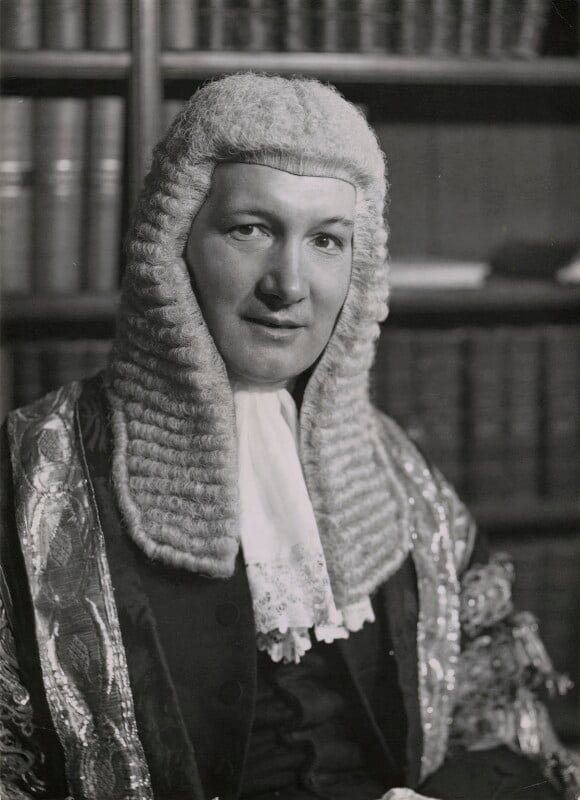
In the long history of English law, few judges are remembered as widely as Alfred Thompson “Tom” Denning, Baron Denning. To lawyers, he was known for his judgments in cases that shaped modern equity, contract, and administrative law. To the public, he was the rare judge who could write clearly enough to be read outside a courtroom.
What set Denning apart was not only his clarity but his conviction that law was more than a system of rules. It was, in his words, “the application of justice according to conscience.” For Denning, that conscience was shaped by his Christian faith. Throughout his long life he spoke openly about belief, serving as President of the Christian Lawyers’ Fellowship and often writing about the moral duty that underlies every judgment.
He once said, “Without religion, there is no morality, and without morality there can be no law.” That belief guided his approach to justice for more than half a century.
Early Life and Education
Denning was born in 1899 in Whitchurch, Hampshire, the son of a draper. His childhood was marked by discipline, modest means, and Anglican faith. He studied mathematics at Oxford University, interrupted by service in the First World War. After the war he returned to Oxford to study law, graduating with first-class honors.
The war left him with a strong sense of order and duty. He entered the Bar in 1923, rising quickly by combining rigorous reasoning with plain English. Colleagues noted that even early in his career, he spoke of law as a moral calling rather than a profession. His Christian upbringing remained central to how he saw justice: as fairness rooted in human dignity, not just logic.

Judicial Career and Approach to Law
Denning became a High Court judge in 1944 and joined the Court of Appeal in 1948. He later served as Master of the Rolls from 1962 until his retirement in 1982. That position, the head of the civil division of the Court of Appeal, allowed him to shape English law for two decades.
He was known for judgments that emphasized fairness and substance over technical form. In Central London Property Trust Ltd v High Trees House Ltd (1947), he developed the modern principle of promissory estoppel, allowing equity to prevent injustice even when contract rules were rigid. His reasoning reflected a belief that law should serve the honest expectations of people rather than the letter of procedure.
He often used moral language in his judgments. He spoke of “the man on the Clapham omnibus,” an ordinary citizen whose sense of fairness was his measure of justice. His Christian view of humanity informed that image: every person carried moral worth before the law.

Faith and the Christian Lawyers’ Fellowship
Outside the courtroom, Denning gave regular talks and writings on Christianity and public life. He served as President of the Christian Lawyers’ Fellowship (now the Lawyers’ Christian Fellowship), which supports legal professionals seeking to practice with integrity and faith. In speeches to the group, he argued that the rule of law rests on moral foundations inherited from Christianity.
He wrote in The Road to Justice (1955) that “Our laws have grown from the soil of the Christian faith. Remove that soil, and the tree will wither.” His view was not evangelistic but historical: he believed English common law had evolved alongside Christian moral teaching, and that both traditions supported personal responsibility, truthfulness, and compassion.
Through this role he encouraged younger lawyers to see justice as a vocation of service rather than competition. For Denning, faith was not separate from legal reasoning but its quiet source.

Moral Philosophy and Controversy
Denning’s confidence in moral reasoning sometimes drew criticism. He was outspoken, and not all his judgments aged well. Late in his career he made remarks on race and the police that were widely condemned, leading to his resignation in 1982.
His influence however endured because he reminded English law that justice is not purely procedural. He once wrote, “A judge must apply the law, but he must also see that the law is just.” That balance between law and conscience, sometimes imperfectly held, defined both his greatness and his controversy.
His Christian view of human fallibility made him aware of error, but not immune to it. In retirement he reflected on the limits of earthly justice, writing, “No man is infallible. We do our best, and leave the rest to God.”
Legacy in English Law
Lord Denning’s judgments are still studied in British law schools. Cases such as High Trees, Miller v Jackson (on private nuisance and the balance between neighbors’ rights), and Ward v James (on damages for personal injury) continue to appear in textbooks. Students often meet him first as a reformer who modernized legal reasoning; only later do they realize his outlook was deeply moral.
Even critics admit that his work restored moral language to law. His plain writing made judgments readable to the public, helping ordinary citizens see law not as an elite code but as the expression of fairness in everyday life.
For Christian lawyers, Denning’s career remains an example of public service shaped by belief. His presidency of the Christian Lawyers’ Fellowship kept the idea of vocation alive in a profession often driven by status or profit.
Conclusion
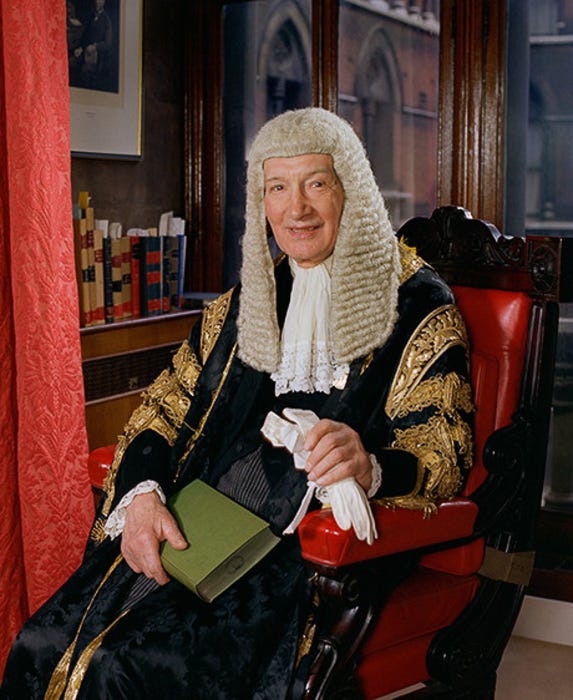
Lord Denning lived to be 100. In his last interviews he still spoke of faith and conscience. He once told a young lawyer, “If you lose your sense of right and wrong, the law will mean nothing to you.”
That conviction runs through his judgments and his speeches. He believed that justice was a living reflection of divine order, imperfectly practiced, yet essential. English law has changed since his time, but his warning still applies: when law forgets its moral roots, it becomes only power.
Denning’s life remains a study in how personal faith can shape public duty. For all his flaws and controversies, he kept alive the idea that the law is not only about winning or losing cases but about preserving the moral fabric of society.
“He hath showed thee, O man, what is good; and what doth the Lord require of thee, but to do justly, and to love mercy, and to walk humbly with thy God.” - Micah 6:8