

The Topography of Tears
What microscopic images of tears can tell us about grief, the body, and faith.

Introduction
In 2008, the American photographer Rose-Lynn Fisher began taking microscope photographs of human tears. She called the project The Topography of Tears. It started during a period of loss in her life, when she wanted to understand sorrow through close observation.
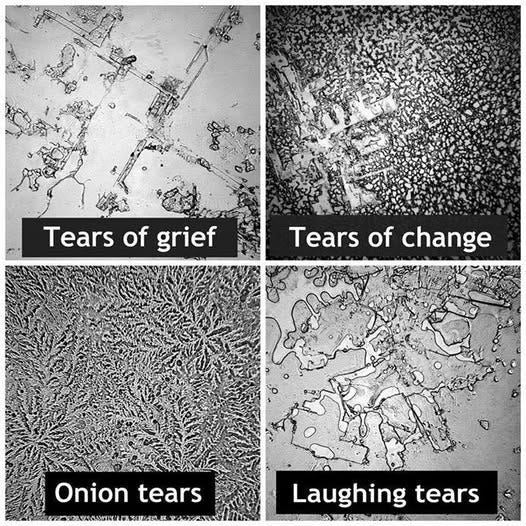
The results were striking. Each dried tear left a pattern that looked like a landscape: rivers, branches, or cracked soil. Fisher photographed tears caused by laughter, grief, pain, and irritation. Every one looked different. The project became a record of emotion seen through matter itself.
For Fisher, the work was about attention. For the Christian viewer, it also points to a truth about the body and the soul: what we feel is not hidden. It takes unique form in the world God made depending on our emotion.
The Artist and Her Process
Fisher collected tears from herself and from volunteers. Each sample was placed on a glass slide, allowed to dry, and then photographed through a light microscope. She later compared tears of emotion to tears from physical causes, such as chopping onions.
Scientists already knew that emotional tears contain more protein and hormones related to stress relief than reflex tears. But Fisher was not making a laboratory report. She was looking for signs of order and pattern, even in sorrow.
Her photographs were later displayed in galleries and books. Viewers described them as both scientific and devotional. They made visible something most people only feel.

Tears in the Bible and Christian Tradition
The Bible speaks often of tears. In the Psalms we read, “You have kept count of my tossings; put my tears in your bottle.” (Psalm 56:8). The verse suggests that sorrow is noticed by God, not lost to the air.
Early Christian writers saw tears as a part of repentance and renewal. St. John Climacus called them “a second baptism.” St. Augustine wept during his conversion and later wrote that his tears were “the blood of my heart.” They believed that to weep before God was to return honestly to Him.
Through that lens, Fisher’s work carries meaning beyond biology. It shows that sorrow leaves a trace, even at the smallest scale. The body participates in spiritual life. What happens in the soul is not separate from what happens in the flesh.
The Incarnation of Emotion
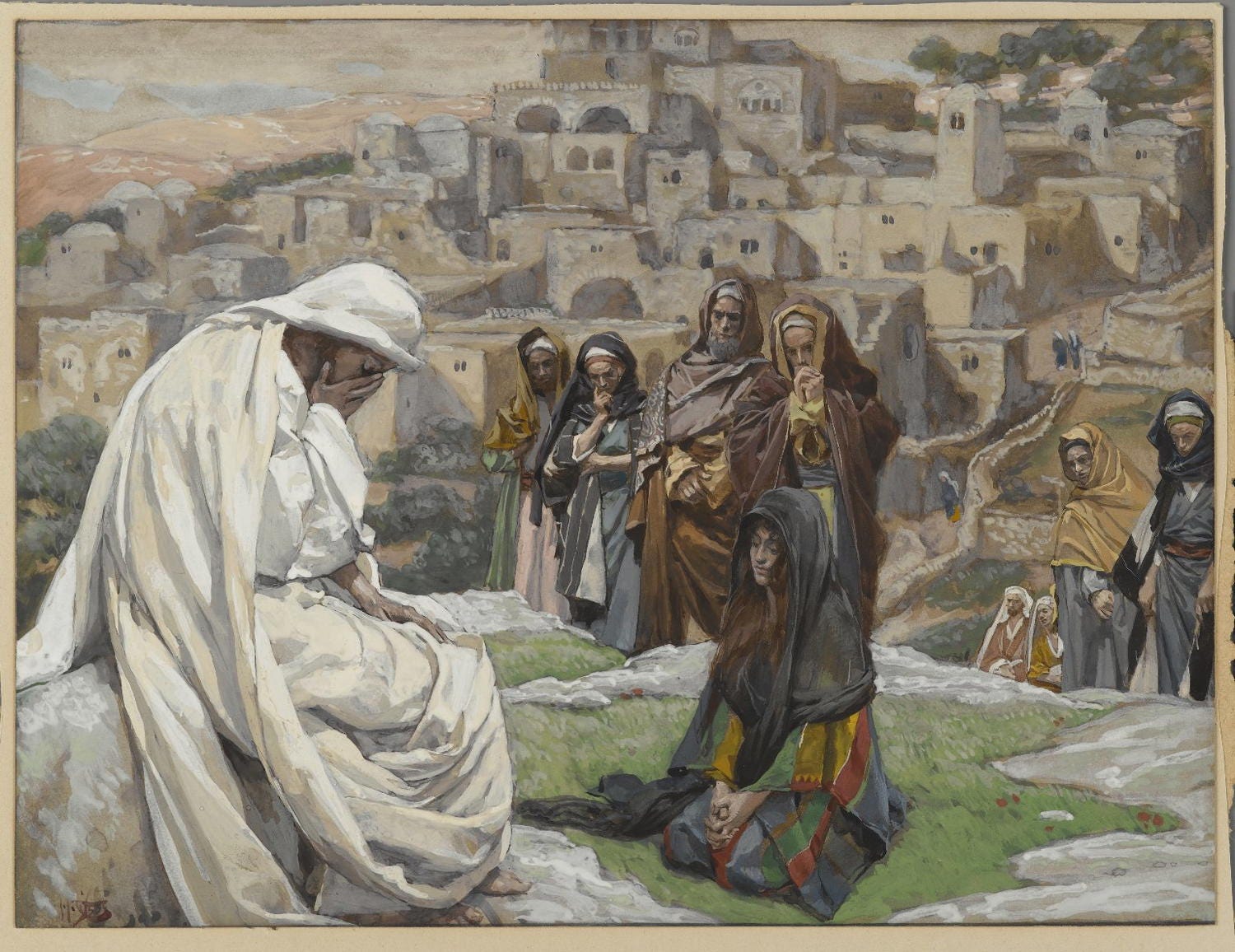
Christians believe that God entered human life completely in the person of Jesus Christ. The Gospels record that He wept at the tomb of His friend Lazarus. There is no sermon there, only silence and tears.
That moment gives weight to every human grief. When Fisher looked through the microscope, she found no two tears alike. Scripture tells us that God numbers even the hairs on our head. It is not far to imagine that He also knows each tear by its form.
Tears as Communion
Fisher said that when she began the project, she started to feel connected to everyone who had ever cried. Each image was different, yet all were made of the same salt and water.
That recognition is what Christians call compassion: to suffer with another person. It is also what prayer often becomes. When words fail, the heart still speaks through tears. They are a universal confession.
In this sense, The Topography of Tears is not just about emotion. It is about the shared condition of humanity. We all mourn. We all hope. Our tears differ only in pattern, not in essence.
The beauty of Fisher’s images is not decorative. It comes from truth. Beauty, in the Christian sense, is the visible form of goodness. To see beauty in a tear is not to romanticize sorrow but to recognize that even pain belongs to creation.
Each photograph is a small act of reverence. It shows that no experience, even grief, is beneath notice. What seems wasteful to the world, the salt of a tear, the dust of the earth, is remembered by God.
Conclusion
In Revelation, John writes, “God shall wipe away all tears from their eyes.” The promise does not deny the existence of pain. It completes it.
Fisher’s microscope cannot explain the soul, but it helps us see that matter itself participates in mystery. The salt of our tears is part of creation’s prayer. Each drop carries both loss and hope.
In the end, her work reminds us that grief is not wasted. It becomes form, and through form, it becomes known.
“Blessed are those who mourn, for they shall be comforted.” - Matthew 5:4